
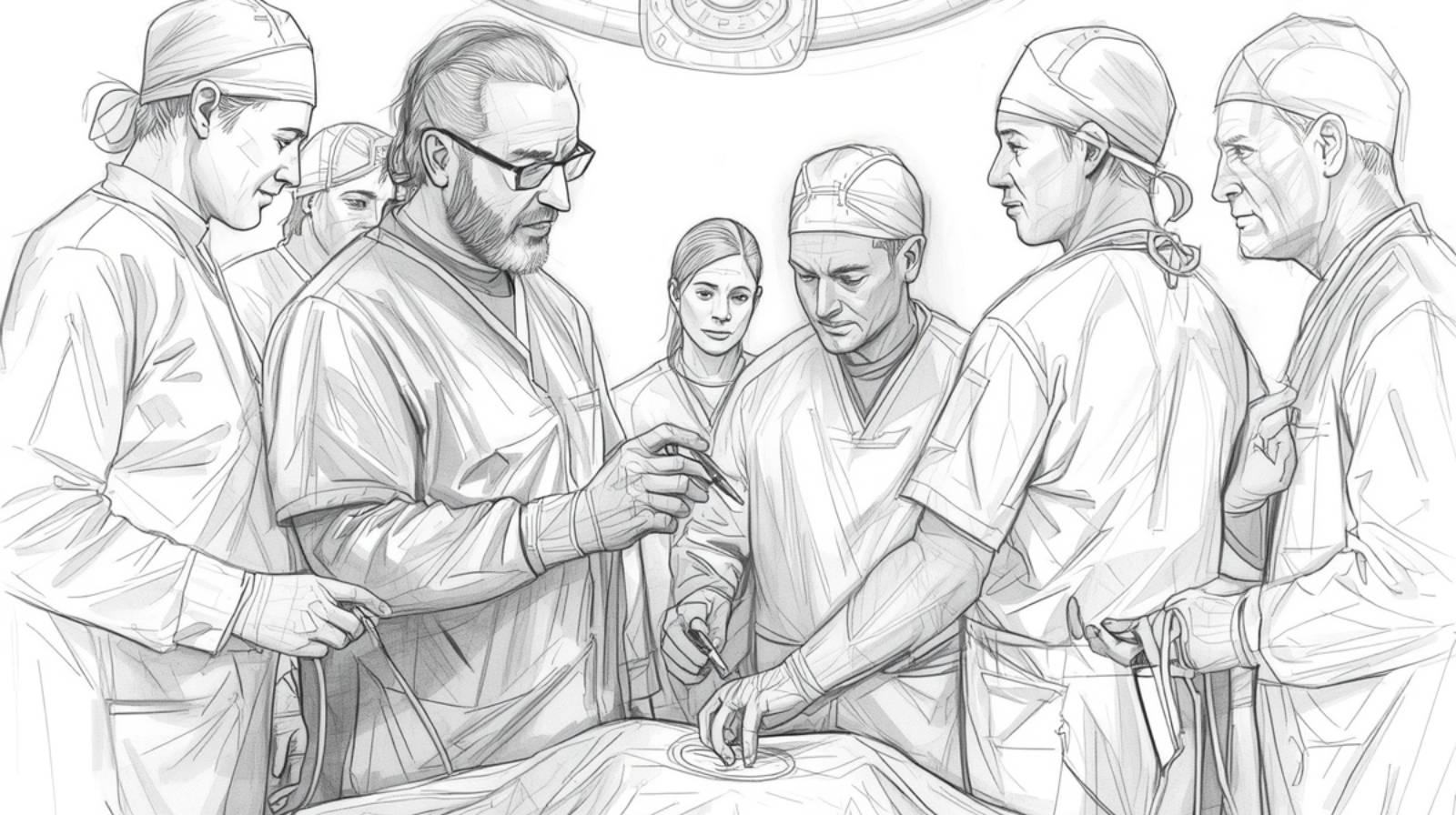
Jason Ramsingh, Consultant Endocrine Surgeon, Newcastle Hospitals, UK
DOI: 10.5281/zenodo.20574677
Robotic surgery is now an established surgical approach in most surgical specialties. Among endocrine surgeons in the UK, adoption has been slow, with robotic adrenal surgery limited to urology centres. In 2022, we became one of the first endocrine surgery units to offer robotic adrenal surgery to patients using a DaVinci Xi robotic system from Intuitive. This narrative review explores our experience in establishing a unique robotic service, focusing on service development, outcome measures, value, training, national expansion and exposure.
Training as a consultant in robotic surgery involves a stepwise approach consisting of dedicated hours on a simulator, dry/wet lab training, case observation, proctored cases followed by independent practice. Given the lack of high volume robotic adrenal surgeons in the UK, the author obtained a travelling fellowship to high-volume centres in Rome, Italy and Nancy, France. The fellowship facilitated discussions on the feasibility and practicalities of starting a robotic adrenal service but also provided insight in how to sustain the service. Given the vast experience of these units, the author was able to obtain mentorship and guidance in his robotic journey which is key for new consultants starting a robotic service de novo.
Governance regarding robotic service development is paramount and each NHS Trust will have their own governance process. Robotic adrenalectomy was defined as a new procedure within our Trust and in addition to robotic governance, there was a separate process as a new procedure. Highlighting current experience in minimally invasive approaches, developing patient information leaflets, identifying suitable proctors, demonstrating case volume, costs and patient benefits of the new approach are essential in getting approval before starting a robotic adrenal service.
After approval, identifying suitable cases and discussion with a proctor helps in ensuring success at the beginning of the robotic journey. It is helpful to perform index procedures first (hernia repairs, cholecystectomy) before proceeding to more complex surgery such as adrenalectomies. Outcomes should be prospectively recorded and fed back to governance groups to ensure safety and quality. Outcomes, if possible, should be compared to standard practice and published. Our unit was able to publish our case series of robotic adrenalectomies, benefits in certain tumour groups and innovative approaches to rare tumours. These outcomes should be presented to governance committees for quality assurance.
Once the robotic service is established and the learning curve is attained (>50 cases), the next step in any robotic programme is training. In our unit, there is a well-established endocrine surgery fellowship. Our first fellow performed/assisted in 30 robotic adrenalectomies as well as other index procedures. Their learning curve was rapid given the high volume of procedures we perform, and this is a key factor in the success of robotic fellowships. Our approach has also been adapted to resident doctors who, after starting their training in the regional robotic training programme (Newcastle Surgical Training Centre) are incrementally introduced into hands-on surgical exposure. Residents at the midpoint of their training can perform >50% of a robotic adrenalectomy demonstrating the faster learning curve compared to laparoscopy.
As mentioned previously, there are limited opportunities for resident doctors and consultants to get exposure to robotic adrenal surgery. We established a bespoke robotic cadaveric course in 2025, developed specifically for adrenal surgery. Established consultants and residents were exposed to the full gamut of robotic surgery from how to develop an adrenal service, simulation, docking, undocking and performing robotic left and right adrenalectomy on fresh frozen cadavers using two DaVinci Xi systems. As one of the first robotic cadaveric courses dedicated for adrenal surgeons, the feedback was reassuring in that everyone saw the value of the course. It ensured that trainees and consultants had a safe environment to practice and develop their robotic skills but most importantly, provided them with valuable insights into start a robotic programme.
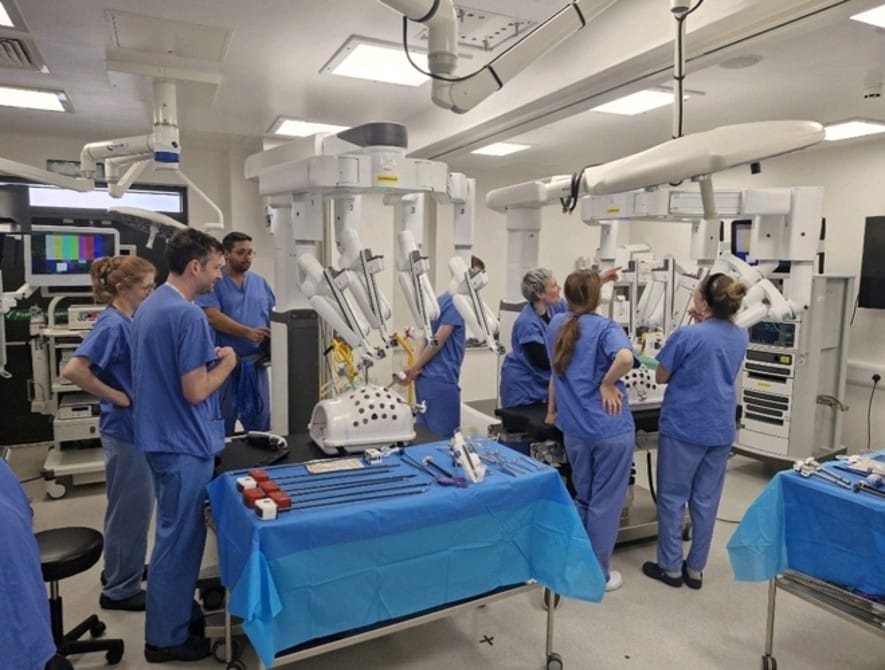
It is important to share the experience of the new service with other colleagues within the surgical community. This can help other Trusts further their own robotic ambitions if they are able to highlight the benefits as demonstrated by our unit. We have presented our findings at numerous national endocrine and general surgery conferences. The author has been invited to speak at several conferences and masterclasses about his experience. We have been able to collaborate and share our experience with colleagues in Europe which adds further validity and recognition of our robotic service.
There are now three endocrine surgery units providing a robotic adrenal service in England. Our previous fellow is now an established robotic adrenal surgeon in Liverpool. She has been able to use her skills attained in our unit to benefit her patients and help train other colleagues. We were able to proctor her for her first few cases and support her in establishing independent practice. She is a faculty member at our cadaveric robotic adrenal course. There is no doubt that with further experience, she will be contributing to the further expansion of robotic services in other parts of the country. It has been a pleasure to see her career progression and provide mentorship.
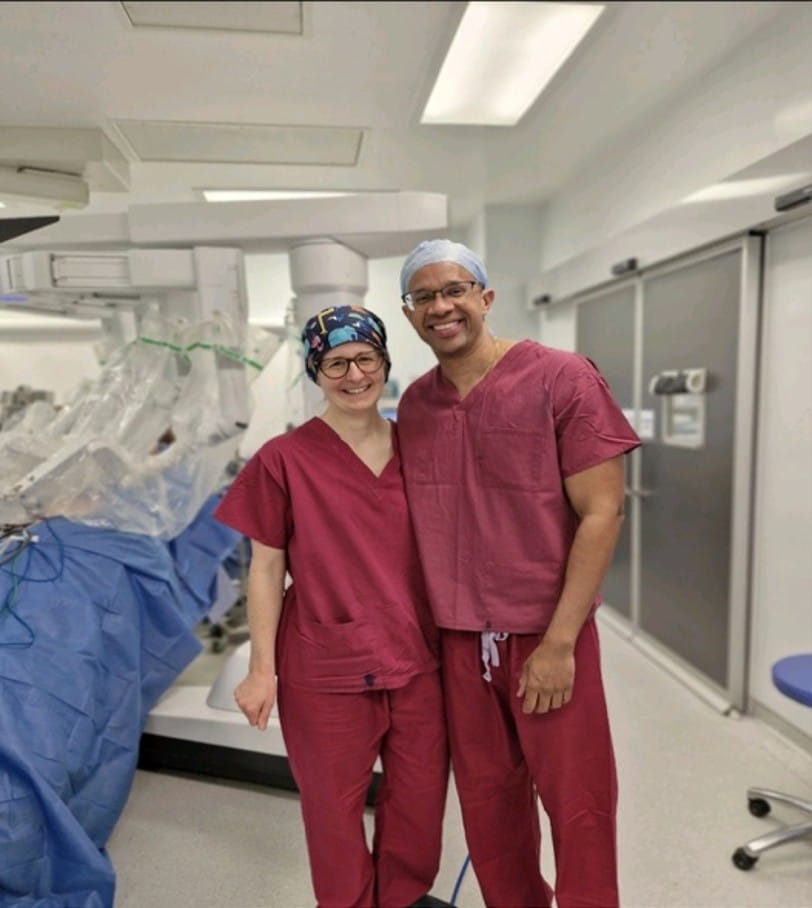
There is a common misconception that robotic surgery takes longer than conventional laparoscopic surgery and is cost prohibitive. It is important that robotic services can demonstrate increase efficiency and productivity with the robot while showing cost effectiveness. The financial sustainability of robotic surgery is essential if we are to achieve the NHS 10-year plan for 90% of minimally invasive surgery to be performed robotically by 2035. In our unit, we have explored using the robot for high intensity lists. We have demonstrated consistently that more cases can be performed robotically compared to laparoscopy, often performing 4-5 robotic adrenalectomies on a regular theatre list. We have published costing data, comparing both approaches, again demonstrating a cost reduction comparted to laparoscopy.
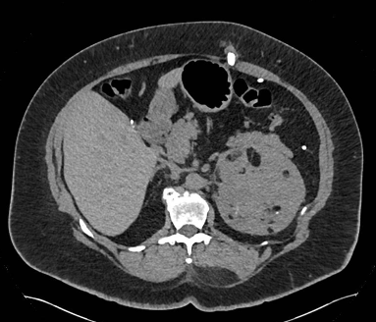
Our robotic adrenal service has highlighted how a structured programme can deliver excellent outcomes and value for patients but also demonstrates how other components such as training, mentorship and governance structures can ensure continued success and sustainability of robotic services.
Conflict of interest statement: None declared.
Corresponding author: Jason Ramsingh, Consultant Endocrine Surgeon, Newcastle Hospitals, UK. j.ramsingh@nhs.net